
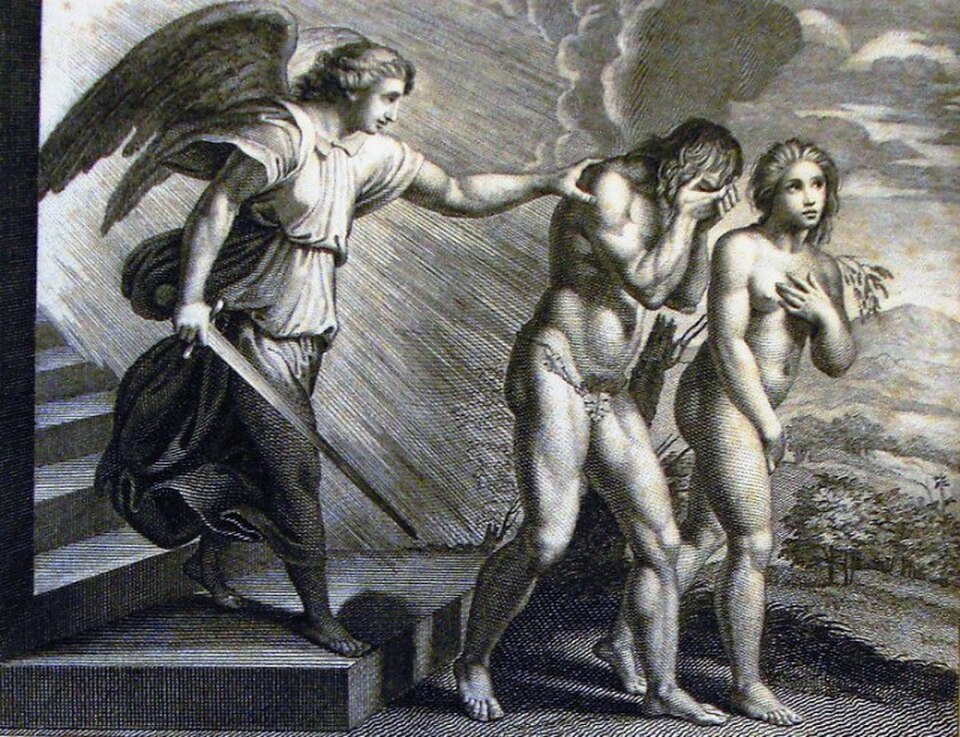
Gnostic View of Adam and Eve

The gnostic view of adam and eve

The Gnostic view of Adam and Eve is very different than what Christian orthodoxy holds. In traditional Christian teaching, our first parents were placed in paradise, and given the privilege of communing openly with God. If you were raised in church, you might have been told that when Eve ate the apple, this act initiated the Fall of Man, and led to all the suffering that we see in the world. Many Gnostics, on the other hand, saw the Garden of Eden as a prison. The serpent who offered Eve the fruit, in several of their texts, is not diabolical but a tool of the divine. In eating from the Tree of the Knowledge of Good and Evil, Eve’s act of rebellion helped liberate her from the grip of a false god.

This liberation, to be clear, is not complete with Adam and Eve. In fact, many Gnostic texts chronicle the pain they experience as a consequence of their choice to eat of the Tree. But the God who punishes them isn’t shown as a compassionate father, guiding them away from their sinful, fallen nature. On the contrary, he is jealous of their state, of the holiness they possess that he does not. He fills their life with toil and pain to keep them in ignorance.

Let us make man

In a previous post, where I wrote on the Gnostic understanding of God, I offered a (qualified) definition of Gnosticism. To avoid repeating myself here, I’ll say that there is a single idea to keep in mind to understand why the Gnostics viewed Adam and Eve so differently than, say, a Roman Catholic might:

This is the idea of “gnosis.” Gnosis is a mystical knowledge prized by Gnostics, something that enlightens the believer and radically alters their view of the world.

Adam and the Archons

Many Gnostics saw the Abrahamic God as an “archon,” a Greek word that means “ruler.” The archons were the authors of our strife-filled, miserable material world. In The Apocryphon of John, the chief archon, and the being Jews and Christians worship as God, is named Yaldabaoth. Yaldabaoth, along with the other archons who served him, tried to make man like we read in Genesis. They formed his body out of matter, but Yaldabaoth didn’t possess divine power, so he couldn’t breathe life into Adam.

Instead, one of the aeons—higher beings, truly divine—helped breathe life into Adam. This didn’t sit well with the archons:

And in that moment the rest of the powers became jealous, because he had come into being through all of them and they had given their power to the man, and his intelligence was greater than that of those who had made him, and greater than that of the chief archon. […] And the archons took him and placed him in paradise. And they said to him, ‘Eat, that is at leisure,’ for their luxury is bitter and their beauty is depraved. And their luxury is deception and their trees are godlessness and their fruit is deadly poison and their promise is death.

This sounds very different from the account we read in Genesis, where a loving God looks over his creation and calls it good. The being we Christians understand as God, according to The Apocryphon of John, along with his friends, saw humankind as a superior creature.

Eve, The Serpent, and the Garden

Any rational person, regardless of religion, would agree that the material world is subject to death and decay. For Christians, this is due to our fallen nature, but many Gnostic systems reimagine the Fall. They see Eve’s eating from the tree not as a tragic event, but as a cause for celebration.

After all, the demiurge that placed them in the Garden—not a paradise but a prison, considering its maker—is hiding their true origin from Adam and Eve.

The Hypostasis of the Archons, another key Gnostic text, claims that the command to not eat of the Tree (or even touch it) undermined the archons. The archons spoke it with the intent to keep man ignorant. But “by the father’s will, they said this in such a way that he might (in fact) eat, and that Adam might <not> regard them as would a man of an exclusively material nature.”

Eve’s dialogue with the serpent is reimagined here as well. It is “the female principle,” often identified as Sophia, inhabiting the serpent in the garden:

Then the female spiritual principle came in the snake, the instructor; and it taught them, saying, “What did he say to you? Was it, ‘From every tree in the garden shall you eat; yet – from the tree of recognizing good and evil do not eat’?”

The carnal woman said, “Not only did he say ‘Do not eat’, but even ‘Do not touch it; for the day you eat from it, with death you are going to die.’”

And the snake, the instructor, said, “With death you shall not die; for it was out of jealousy that he said this to you. Rather your eyes shall open and you shall come to be like gods, recognizing evil and good.” […]

And the carnal woman took from the tree and ate; and she gave to her husband as well as herself; and these beings that possessed only a soul, ate. And their imperfection became apparent in their lack of knowledge; and they recognized that they were naked of the spiritual element, and took fig leaves and bound them upon their loins.

When Adam and Eve ate from the Tree, they received gnosis. They knew evil and good, and “became like gods.” The serpent speaks very similar words to Eve in Genesis; here, though, the serpent is right.

Topsy-Turvy

It is this sort of inversion that characterizes so much of Gnostic scripture. What we considered evil is asserted to be good, and vice-versa.

We find this even more clearly in another Gnostic text, On the Origin of the World. In its account, “the wisest of all creatures,” who is called Beast” approached Eve. As in The Hypostasis of the Archons, there follows a slightly modified version of what we find in Genesis.

It is telling that On the Origin of the World calls a creature named “Beast” the wisest of all. It is even more telling, I think, that this Beast was the one that offers Eve a path to gnosis. Earlier in the text, we learn that Beast—whose name evokes one of the chief villains of The Book of Revelation—is a misunderstood fellow. Beast is the child of a being called Hermaphrodites, or “Eve of Life,” defined as “the female instructor of life.” Both mother and child originate from Sophia, a being who dwells in a higher realm than the wicked archons.

“Beast” is a name given to this “wisest of all beings” by the archons, “so that it might lead astray their modelled creatures.” In fact, we should understand Beast as an “instructor.” He’s misunderstood, and he’s apparently on our side.

On the Origin of the World says the following about Adam and Eve eating from the Tree:

Now Eve had confidence in the words of the instructor. She gazed at the tree and saw that it was beautiful and appetizing, and liked it; she took some of its fruit and ate it; and she gave some also to her husband, and he too ate it. Then their intellect became open. For when they had eaten, the light of knowledge had shone upon them. When they clothed themselves with shame, they knew that they were naked of knowledge. When they became sober, they saw that they were naked and became enamored of one another. When they saw that the ones who had modelled them had the form of beasts, they loathed them: they were very aware.

When Adam and Eve at the fruit, the gnosis they gained was even more profound than what we find in The Hypostasis of the Archons. They saw how evil “the ones who modelled them” were—”the instructor” showed them that he wasn’t the one to be feared or suspected. In fact, it was the Abrahamic God and his companions who now “had the form of beasts.”

Conclusion

If the devil told his side of the story, I’d suspect it might sound something like what we read in these texts. Adam and Eve learn not to love God through Gnosis, but to hate him, and even to embrace the Beast who teaches them to do so.

The God of the Bible receives a real demotion in Gnostic scripture. Adam and Eve aren’t guilty of a tragic sin, but perform a necessary act of rebellion. Given the upside-down nature of this retelling, we can assume that Gnosticism reframes Christ’s nature, his mission, and his sacrifice in an equally diabolical way.


Gnostic View of Adam and Eve

The gnostic view of adam and eve

The Gnostic view of Adam and Eve is very different than what Christian orthodoxy holds. In traditional Christian teaching, our first parents were placed in paradise, and given the privilege of communing openly with God. If you were raised in church, you might have been told that when Eve ate the apple, this act initiated the Fall of Man, and led to all the suffering that we see in the world. Many Gnostics, on the other hand, saw the Garden of Eden as a prison. The serpent who offered Eve the fruit, in several of their texts, is not diabolical but a tool of the divine. In eating from the Tree of the Knowledge of Good and Evil, Eve’s act of rebellion helped liberate her from the grip of a false god.

This liberation, to be clear, is not complete with Adam and Eve. In fact, many Gnostic texts chronicle the pain they experience as a consequence of their choice to eat of the Tree. But the God who punishes them isn’t shown as a compassionate father, guiding them away from their sinful, fallen nature. On the contrary, he is jealous of their state, of the holiness they possess that he does not. He fills their life with toil and pain to keep them in ignorance.

Let us make man

In a previous post, where I wrote on the Gnostic understanding of God, I offered a (qualified) definition of Gnosticism. To avoid repeating myself here, I’ll say that there is a single idea to keep in mind to understand why the Gnostics viewed Adam and Eve so differently than, say, a Roman Catholic might:

This is the idea of “gnosis.” Gnosis is a mystical knowledge prized by Gnostics, something that enlightens the believer and radically alters their view of the world.

Adam and the Archons

Many Gnostics saw the Abrahamic God as an “archon,” a Greek word that means “ruler.” The archons were the authors of our strife-filled, miserable material world. In The Apocryphon of John, the chief archon, and the being Jews and Christians worship as God, is named Yaldabaoth. Yaldabaoth, along with the other archons who served him, tried to make man like we read in Genesis. They formed his body out of matter, but Yaldabaoth didn’t possess divine power, so he couldn’t breathe life into Adam.

Instead, one of the aeons—higher beings, truly divine—helped breathe life into Adam. This didn’t sit well with the archons:

And in that moment the rest of the powers became jealous, because he had come into being through all of them and they had given their power to the man, and his intelligence was greater than that of those who had made him, and greater than that of the chief archon. […] And the archons took him and placed him in paradise. And they said to him, ‘Eat, that is at leisure,’ for their luxury is bitter and their beauty is depraved. And their luxury is deception and their trees are godlessness and their fruit is deadly poison and their promise is death.

This sounds very different from the account we read in Genesis, where a loving God looks over his creation and calls it good. The being we Christians understand as God, according to The Apocryphon of John, along with his friends, saw humankind as a superior creature.

Eve, The Serpent, and the Garden

Any rational person, regardless of religion, would agree that the material world is subject to death and decay. For Christians, this is due to our fallen nature, but many Gnostic systems reimagine the Fall. They see Eve’s eating from the tree not as a tragic event, but as a cause for celebration.

After all, the demiurge that placed them in the Garden—not a paradise but a prison, considering its maker—is hiding their true origin from Adam and Eve.

The Hypostasis of the Archons, another key Gnostic text, claims that the command to not eat of the Tree (or even touch it) undermined the archons. The archons spoke it with the intent to keep man ignorant. But “by the father’s will, they said this in such a way that he might (in fact) eat, and that Adam might <not> regard them as would a man of an exclusively material nature.”

Eve’s dialogue with the serpent is reimagined here as well. It is “the female principle,” often identified as Sophia, inhabiting the serpent in the garden:

Then the female spiritual principle came in the snake, the instructor; and it taught them, saying, “What did he say to you? Was it, ‘From every tree in the garden shall you eat; yet – from the tree of recognizing good and evil do not eat’?”

The carnal woman said, “Not only did he say ‘Do not eat’, but even ‘Do not touch it; for the day you eat from it, with death you are going to die.’”

And the snake, the instructor, said, “With death you shall not die; for it was out of jealousy that he said this to you. Rather your eyes shall open and you shall come to be like gods, recognizing evil and good.” […]

And the carnal woman took from the tree and ate; and she gave to her husband as well as herself; and these beings that possessed only a soul, ate. And their imperfection became apparent in their lack of knowledge; and they recognized that they were naked of the spiritual element, and took fig leaves and bound them upon their loins.

When Adam and Eve ate from the Tree, they received gnosis. They knew evil and good, and “became like gods.” The serpent speaks very similar words to Eve in Genesis; here, though, the serpent is right.

Topsy-Turvy

It is this sort of inversion that characterizes so much of Gnostic scripture. What we considered evil is asserted to be good, and vice-versa.

We find this even more clearly in another Gnostic text, On the Origin of the World. In its account, “the wisest of all creatures,” who is called Beast” approached Eve. As in The Hypostasis of the Archons, there follows a slightly modified version of what we find in Genesis.

It is telling that On the Origin of the World calls a creature named “Beast” the wisest of all. It is even more telling, I think, that this Beast was the one that offers Eve a path to gnosis. Earlier in the text, we learn that Beast—whose name evokes one of the chief villains of The Book of Revelation—is a misunderstood fellow. Beast is the child of a being called Hermaphrodites, or “Eve of Life,” defined as “the female instructor of life.” Both mother and child originate from Sophia, a being who dwells in a higher realm than the wicked archons.

“Beast” is a name given to this “wisest of all beings” by the archons, “so that it might lead astray their modelled creatures.” In fact, we should understand Beast as an “instructor.” He’s misunderstood, and he’s apparently on our side.

On the Origin of the World says the following about Adam and Eve eating from the Tree:

Now Eve had confidence in the words of the instructor. She gazed at the tree and saw that it was beautiful and appetizing, and liked it; she took some of its fruit and ate it; and she gave some also to her husband, and he too ate it. Then their intellect became open. For when they had eaten, the light of knowledge had shone upon them. When they clothed themselves with shame, they knew that they were naked of knowledge. When they became sober, they saw that they were naked and became enamored of one another. When they saw that the ones who had modelled them had the form of beasts, they loathed them: they were very aware.

When Adam and Eve at the fruit, the gnosis they gained was even more profound than what we find in The Hypostasis of the Archons. They saw how evil “the ones who modelled them” were—”the instructor” showed them that he wasn’t the one to be feared or suspected. In fact, it was the Abrahamic God and his companions who now “had the form of beasts.”

Conclusion

If the devil told his side of the story, I’d suspect it might sound something like what we read in these texts. Adam and Eve learn not to love God through Gnosis, but to hate him, and even to embrace the Beast who teaches them to do so.

The God of the Bible receives a real demotion in Gnostic scripture. Adam and Eve aren’t guilty of a tragic sin, but perform a necessary act of rebellion. Given the upside-down nature of this retelling, we can assume that Gnosticism reframes Christ’s nature, his mission, and his sacrifice in an equally diabolical way.